Blank Texas Behind Wheel PDF Template
Form Example
20 HOUR BEHIND THE WHEEL PRACTICE LOG
Instruction Guide
20 Hours
Texas Education Agency, Driver Training Division
Texas Department of Public Safety, Driver License Division
Special Thanks
… to all the people who contributed to the development of this Guide.
This Guide was developed by the Texas Education Agency, Driver Training Division in partnership with the Texas Department of Public Safety, Driver License Division. The information contained in this Guide is not intended to be a comprehensive document for teaching good driving habits. As a helpful guide it contains information that, if used, can help reduce risk. Good judgment should be used to adapt this information to different driving situations and conditions.
This Guide supports the important partnerships between driver education and training instructors, young drivers and their parents/guardians. It is our hope that this information will contribute to a lifetime of reduced risk driving habits.
Special thanks go to the Idaho Department of Education, Oregon Department of Transportation, and the Virginia Department of Education for the use of their parent curriculum guides.
Robert Scott
Commissioner of Education
Ray Glenn
Deputy Commissioner School District Leadership and Educator Quality
Jerel Booker
Associate Commissioner Educator Quality and Standards
Julie
Deputy Associate Commissioner Student Support
Victor Alegria
Director, Driver Training Division
Copyright © Notice The materials are copyrighted © and trademarked ™ as the property of the Texas Education Agency (TEA) and may not be reproduced without the express written permission of TEA, except under the following conditions:
1)Texas public school districts, charter schools, licensed driver education schools, and Education Service Centers may reproduce and use copies of the Materials and Related Materials for the districts and schools’ educational use without obtaining permission from TEA.
2)Residents of the state of Texas may reproduce and use copies of the Materials and Related Materials for individual personal use only without obtaining written permission of TEA.
3)Any portion reproduced must be reproduced in its entirety and remain unedited, unaltered and unchanged in any way.
4)No monetary charge can be made for the reproduced materials or any document containing them; however, a reasonable charge to cover only the cost of reproduction and distribution may be charged.
Private entities or persons located in Texas that are not Texas public school districts, Texas Education Service Centers, or Texas charter schools or any entity, whether public or private, educational or
Federal law prohibits discrimination on the basis of race, color, national origin, gender, religion, age, disability, political beliefs, sexual orientation, or marital or family status in any educational programs or activities receiving federal financial assistance. (Title VI and VII of the Civil Rights Act of 1964; Title IX of the Educational Amendments of 1972; Section 504 of the
rehabilitation Act of 1973, and the Americans with Disabilities Act of 1990.) It is the policy of the Texas Education Agency not to discriminate in any educational programs or activities or in employment practices.
2
Table of Contents |
|
|
Page |
Young Drivers |
4 |
Texas Graduated Driver License Program |
5 |
Provisional License |
6 |
Message from NHTSA |
6 |
Suggestions To Enhance Your Experience |
8 |
Suggestions Before Beginning Practice |
8 |
Control of Vehicle |
9 |
Commentary Driving |
9 |
During ALL Practice Hours: Your Teenager |
9 |
Sharing the Road Safely with Commercial Motor Vehicles and Large Trucks |
10 |
Sharing the Road Safely with Motorcycles |
10 |
21st Century Driving |
11 |
Driving in Adverse Conditions |
13 |
Top Driving Errors |
14 |
Getting Ready, Starting, Placing the Vehicle in Motion, and Stopping |
14 |
Moving, Stopping, Steering, Knowing Where You Are |
15 |
Backing |
16 |
Turning, Lane Position, and Visual Skills |
16 |
Searching Intended Path of Travel |
18 |
Parking |
19 |
Turnabouts |
21 |
Multiple Lane Roadways |
22 |
City Driving |
24 |
Expressways/Freeways |
25 |
Skid Recovery |
26 |
Avoid Aggressive Drivers or Fatigued Drivers |
26 |
27 |
|
Crossing Railroad Tracks |
28 |
Braking Methods |
28 |
Other Resources |
29 |
Driving Agreement |
30 |
20 Hour |
31 |
3

Young Drivers
Driving provides teenagers greater mobility. The knowledge, skills, judgment, behaviors, and understanding necessary to operate a vehicle safely take time to develop. Safe drivers are not just born. In the driver education course your young driver acquired new and important knowledge and skills about basic vehicle operation such as turning, backing, and parking. Usually, these skills are not difficult for young drivers to master. However, other skills, such as judgment and understanding, require more practice.
Driving is not a right; it
is a privilege with
obligations,
responsibilities, and
consequences.
In 2008, motor vehicle crashes were the number one cause of death for young people ages 15 to 20 years old as 3,873 passenger vehicle occupants this age
were killed in motor vehicle crashes with ½ (2,1,42) not wearing a safety belt at the time of the fatal crash. In addition, 228,000 were injured in these motor vehicle crashes.
Texas Traffic Statistics may be located on the Texas Department of Transportation website: http://www.txdot.gov/
The U.S. Department of Transportation’s National Highway Traffic Safety Administration (NHTSA) endorses that “parental involvement can mean the difference between life and death” during a teenager’s driving experience. NHTSA asks parents to be involved in their young driver’s driving instruction by supervising
In an effort to reduce teenager’s crashes and to save lives in Texas, the 81st Texas legislature enacted the Less Tears More Years Act, which requires new drivers to have more driving experience prior to obtaining a license. Under this act young drivers must receive an additional 20 hours of
These 20 hours of
Adult Qualifications: Section 521.222(d)(2), Transportation Code
(d)An instruction permit entitles the holder to operate a type of motor vehicle on a highway while: (1) the permit is in the holder's possession; and (2) the holder is accompanied by a person occupying the seat by the operator who: (A) holds a license that qualifies the operator to operate that type of vehicle; (B) is 21 years of age or older; and (C) has at least one year of driving experience.
(g)A person who occupies the seat in a vehicle by a holder of an instruction permit commits an offense if, while the holder is operating the vehicle, the person: (1) sleeps; (2) is intoxicated, as defined by Section 49.01, Penal Code; or (3) is engaged in an activity that prevents the person from observing and responding to the actions of the operator.
Daytime means the period beginning
Nighttime means the period beginning
Consider this document as a guide. It includes ideas that should become an important part of your young driver’s instruction time. It describes basic skills required in everyday driving and where to practice these skills so that the needed additional
Be aware that young drivers have more difficulty maintaining attention and understanding how, when, what, who, and where to watch. Their ability to judge distance also can be challenging.
4
Whether you live in a rural setting or a large community, allow your teenager to observe, explore, and drive in progressively larger, more complex settings. For instance, allow your teenager to practice when weather limits visibility or there is reduced traction, or to drive on busier streets.
Your teenager’s thought process,
Texas Graduated Driver License Program
Phase One
Applicants under age 18 must hold an instruction permit or hardship license for a minimum of six months prior to issuance of a provisional Class A, B, or C driver license. In addition, the minimum age of the person who must accompany any instruction permit holder during the operation of the vehicle is 21 years of age. Except for hardship licenses, a minor is not eligible to graduate to Phase Two (provisional license) for a Class A, B, or C driver license until they have completed this phase and met all other current licensing and age requirements.
The instruction permit must remain valid during the mandatory
One requirement.
Once the applicant has held a valid instruction permit or hardship license for a minimum of six months, has reached the age of 16 for a Class C license (17 years of age for a Class A or B
Under the GDL program, there is no minimum time that a person must hold a restricted motorcycle or moped license before they can apply for a Class M license.
Phase Two
Phase Two restricts the driving privileges of persons under 18 years of age during the
A teenager under the age of eighteen may not operate a motor vehicle while using a wireless communication device, except in case of an emergency.
Under Phase Two, a person under 17 years of age who holds a restricted motorcycle license or moped license, during the
The license restriction will state, "TRC 545.424 applies until MM/DD/YY" and will indicate the date in which the second phase of the graduated driver license expires for the person who holds that license. Upon completion of the
5
Provisional License
All original licenses, other than an instruction permit, issued to persons under 18 years of age will be marked "Provisional.” The license will be vertical and will be dated to expire on the applicant's 18th birthday. A fee is required to obtain this license. If the instruction permit or driver license is not due for renewal, a fee is required for a duplicate instruction permit or duplicate license.
Documentation to Department of Public Safety (DPS) for Provisional License (Unrestricted driver license): Once the applicant has held a valid instruction permit or hardship license for a minimum of six months, has reached the age of 16 for a Class C license (17 years of age for a Class A or B
1.Valid Learner’s License (Instruction Permit)
2.Verification of Enrollment and Attendance Form
3.DE 964 from school which provided the driver education course
4.20 Hours
5.The vehicle used for the Road Test must be able to pass an inspection where everything works properly, have a valid inspection sticker, valid registration sticker, and current insurance
6.Money to pay for license
Message from NHTSA about Parent/Guardian’s Role in Teenage Driving
www.nhtsa.gov
It's not just good parenting; it's a matter of life and death. You need to talk to your teenager about traffic safety early and often – before they reach driving age. When your teenager begins driving, we recommend that you set rules and then clearly outline the consequences of breaking the rules. Remind your teenager that driving is a privilege – a privilege they will lose if they don't drive by your rules. We know that getting through to your teen can be tough, but research tells us that teens listen to their parents, and that you influence your teenager’s driving habits.
Set the Standard
You need to teach safe driving behavior from the beginning. As the parent, you can start by modeling safe driving behavior anytime you drive your kids anywhere, even before they begin to drive.
Talk to your teen about safety issues and the rules you are setting. Explain each one of your rules and the consequences for breaking it. Write up a contract with your teen driver to make sure they drive by the rules and drive as safely as possible. Include the most important issues. Here's how: Spell out the rules
1.Absolutely No Alcohol or Drugs Teen drivers (ages
These are staggering statistics - In 2007, almost
The consequences are grim - If your teenager is lucky enough to survive a crash, they will have to face the consequences of breaking the law. That includes a trip to jail, the loss of their driver’s license, and dozens of other expenses including attorney fees, court costs, and other fines. They will also stand to lose academic eligibility, college acceptance, scholarship awards, and more.
6
2.Seat belts: Always Buckle Up! Teens buckle up far less frequently than adults do. The very first thing you can do is set the right example for your teenager by buckling yourself up every time you get in the car.
Wearing a seat belt is free, but not
wearing it could cost a life
When your teen is ready to drive, remind them that whether they are driving across town or just around the neighborhood,
wearing seat belts is the absolute best way to protect themselves and their passengers from severe injury or even death in the event of a crash.
Despite efforts aimed at increasing belt use among teens, observed seat belt use among teens and young adults (16 to 24 years old) stood at 76 percent in 2006 – the lowest of any age group.
In 2007 alone, 4,540 teenagers aged 16 to 20 years old were killed in motor vehicle crashes, and more than half (2,502) were not wearing their seat belts at the time of the crash.
We don’t know what the outcome would have been for those 2,502 teens had they buckled up, but statistics tell us that in that same year, 72 percent of the passenger vehicle occupants involved in fatal crashes who WERE wearing their seat belts survived the crash.
3.Cell phone/texting: No talking or texting while driving. Talking on a cell phone while driving slows down the reaction time of even the most experienced driver – making it the same as that of a
imagine the impact it will have on your teenager? And texting while driving is a serious risk for teen drivers as well, forcing them to take their eyes and at least one hand off the steering wheel.
Distracted drivers can kill or be killed. Driving distractions like talking on a cell phone or texting while driving are an even greater threat for teens than for others. In 2006, among drivers 15 and older involved in fatal crashes, 15- to
4.Curfew: Have the car in the driveway by curfew. Talk to your teen driver about when you expect them to have the car back in the driveway. The reason for setting a
5.Passengers: No more than one at all times. Most teens are susceptible to peer pressure, which can lead to
Most of the deaths in crashes involving young drivers are the young drivers themselves and their passengers.
The more, the scarier - Research shows that the risk of a fatal crash goes up in direct relation to the number of teenagers in the car.
6.Graduated Drivers License (GDL): Follow the state's GDL law. Texas is one of the states including the District of Columbia that has adopted a Graduated Driver’s License law. Make sure you and your teenage driver know and understand the law, before they get behind the wheel.
Young, inexperienced drivers, particularly 16 to
7

7. Parental Responsibility: Set your house rules and consequences. Never |
Be supportive and positive; |
|
forget that many young drivers (15 – 20 years old) are killed in crashes on |
||
this will promote success. |
||
our roadways every year. Talk to your young drivers about their driving |
||
|
||
before and after they have their permit or license. Set the rules for driving and explain the consequences of |
||
breaking the rules. In fact, your house rules can be tougher than the GDL laws, based on your assessment of your teen.
Be accountable, make them accountable - Write up an agreement that spells it out. Sign it and have your teen driver sign. Remind them that driving is a privilege that can be easily revoked. Review the agreement often.
You can have an agreement with your teen without writing it down; however writing it down makes it more enforceable and meaningful. Keep an open dialog with your young driver and make your rules and consequences crystal clear. Talk often and stick to your own rules and consequences.
Suggestions To Enhance Your Experience
•Set aside time for practice.
•Be relaxed and keep your voice calm.
•Give clear feedback immediately and precisely.
•Plan your route before you start; rush hour traffic may not be the best time to practice.
•Know when to talk; a complicated maneuver may require lots of concentration.
•Reinforce the skills taught by the driver education course and have the Texas Driver Handbook available for reference.
•Make this time enjoyable and focus on the driving task, leaving other issues for later.
• Reinforce good
• Be a role model by wearing your safety belt and using correct driving procedures such as making a complete stop at stop signs, slowing to a stop at yellow lights, and obeying the speed limit, etc.
• Be patient, calm, and alert at all times making positive remarks frequently.
Suggestions Before Beginning Practice
• If possible, instruction should begin in a car with automatic transmission so that your teenager can focus on mastering basic vehicle control maneuvers.
•Select traffic environments that complement the lesson objectives and the teenager’s abilities.
•Begin in a
•Review previous lessons and explain what the next lesson will be before proceeding.
•Keep instructions simple and concise. First direct where to go, and then state the action to take (e.g., “At the next intersection, turn right.”)
•Check mirrors, and the space to all sides and ahead of the vehicle before giving directions.
•Remind the young driver not to panic when approached by an emergency vehicle and to focus on looking for a safe area to pull over.
•Discuss the rules for sharing the roadway with other users including pedestrians, bicycles, motorcycles school buses, trains, trucks, animals, etc and explain the risk each one presents.
•Encourage your teenager to change their route to avoid making a difficult left turn.
8
Control of Vehicle
To provide you with some control of the vehicle you may want to practice steering from the passenger seat. If the parking brake is located in the console between the driver and passenger front seats, you may want to see if it will slow or stop the vehicle. To prepare yourself to regain speed control in the event your teenager panics and accelerates too much, practice shifting the transmission from drive to neutral from the passenger seat. You may want to adjust the mirror on the passenger sun visor so you can use it as a rearview mirror. Also, you may want to use the right outside mirror.
Commentary Driving
Encourage the use of commentary driving. This tool will allow you to check how your teenager is mentally processing driving skills and evaluating the environment. Ask your teenager to “read the traffic picture aloud” describing anything that may affect the roadway ahead or behind. For example, when your teenager changes speed, your teenager may say: “red light, check mirror, ease foot off accelerator , and brake.” Actually, you should frequently hear “check mirror and ease off accelerator”! Emphasize driving with a large anticipation zone by looking at least
During ALL Practice Hours: Your Teenager
•Possesses a valid learner’s license or driver license.
•Is mentally, emotionally, and physically prepared to drive. Do not
drive fatigued, aggressively, or distracted.
• Completes
• Uses and require passengers to use safety belts / teenager safety restraints.
•Performs proper starting tasks.
•Identifies and properly responds to alert and warning lights on the instrument panel.
•Obeys all traffic laws.
•Is watchful and attentive to the traffic scene by looking ahead and to the sides and checking mirrors to the sides and rear.
•Searches from the vehicle to at least 15 seconds ahead when driving in residential/city traffic and 20 to 30 seconds ahead during freeway/expressway driving.
•Checks blind spots prior to changing lanes or making a lateral maneuver.
•Understands that a green light means one must scan the intersection before proceeding.
•Searches/scans to continuously identify hazards.
•Uses a space management system (safe space around the vehicle) to establish and maintain proper vehicle operating space and lane position.
•Performs speed and position changes in response to traffic flow and volume.
•Positions the vehicle to maintain an open line of sight and path of travel.
•Maintains an adequate following distance between vehicles in front and behind (recommended at least 4 seconds for teenagers).
•Maintains adequate side space.
•Communicates with other roadway users (signal lights, hand signals, horn if necessary, lane placement, eye contact).
•Brakes smoothly, gradually slowing to a stop (taps brakes and check rearview before slowing or stopping to warn other roadway
users).
• Accelerates smoothly, steadily increasing to safe speed within posted limit and maintains appropriate speed.
•Uses accelerator and brake pedals properly to manage vehicle balance.
•Identifies and responds appropriately to all traffic signals, signs, and roadway markings.
•Gives or accepts the
9
•Recognizes where the front, sides, corners, and rear of the vehicle are in relation to the roadway.
•Shares the road with and yields appropriately to other roadway users including identifying bicyclists, pedestrians, motorcycles, work zone and construction workers, trucks, and school buses, etc.
•Yields properly to emergency vehicles.
•Turns from and into proper lanes and properly uses turning lanes.
•Makes speed adjustments accordingly by performing speed and position changes in response to traffic flow and traffic volume.
•Anticipates the actions of other roadway users.
•Is courteous to other roadway users who may be trying to pass or change lanes.
•Drives to conserve fuel and protects the environment while driving (such as do not litter).
•Uses headlights (including bright lights), windshield wipers, defroster, and other vehicle devices appropriately.
•Avoids other roadway users who are not mentally, emotionally, and physically prepared to drive including fatigued drivers, aggressive drivers, and distracted drivers.
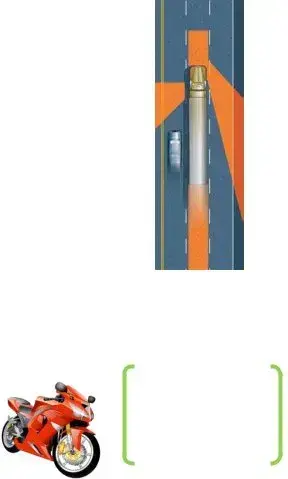
•Avoids driving in another vehicle’s blindspot, especially around and behind large trucks.
•Recognizes adverse conditions and applies countermeasures to drive safely including increasing following distance.
•Performs
Sharing the Road Safely with Commercial Motor Vehicles and Large Trucks
Procedures
1.Learn to read the language of trucks
1.Weight (loaded or unloaded) will cause the truck to act differently
2.Weather conditions may result in less reaction time
3.Spray coming off the truck’s wheels can reduce your visibility
4.Trucks may not be able to stop on snow or ice
5.Use turn signals and brake lights to communicate your intention sooner than you would in normal traffic
2.Stay visible in the truck drivers’ mirrors
6.Know the truck driver can’t see directly in front of the tractor’s hood
3.Be alert to trucks turning right, they need space to make wide right turns
Common Mistakes
1.Following too closely
2.Pacing alongside a truck on multiple lane highways
3.Not reading a truck’s need for room to maneuver
4.Failing to merge smoothly onto a freeway with trucks
4.Cutting across several lanes to exit a roadway, creating high risk for everyone
5.Hanging out in the No Zone (www.nozone.org)
Sharing the Road Safely with Motorcycles
Most motorcycle crashes occur when another driver turns in front of them. When you drive, you have an
automobile wrapped around you specifically designed to help you survive a crash. Motorcyclists may have a helmet
and the clothes on their back.
•Look longer for motorcycles, especially when turning left
•Look for riders when pulling out on the road
•Anticipate a motorcyclist’s maneuvers
•Give motorcycles their full lane
•Use signals when appropriate
•Treat riders with courtesy and respect
•Allow plenty of space when following a motorcycle
•Watch for motorcycles in your blind spot
•Maintain safe following and stopping distances
•Slow down in poor driving conditions
Learn more about
Motorcycle Awareness at www.looklearnlive.com
10
More PDF Templates
Form 2982 - This personal history statement aims to uphold the integrity of the law enforcement community.
How Much Does It Cost to Take Someone to Small Claims Court in Texas - Not only does the form request specific information, but it also fosters a fair exchange between parties.
Texas Dmv - Field validations help prevent errors during the submission process.
Common mistakes
-
Incomplete Information: Many people fail to fill out all required fields, leaving blanks that can delay processing.
-
Incorrect Dates: Entering the wrong dates for practice hours or other important events can lead to confusion and potential rejection of the form.
-
Signature Issues: Forgetting to sign the form or providing a signature that does not match the name listed can cause problems.
-
Misunderstanding Adult Qualifications: Some applicants do not verify that the supervising adult meets the necessary qualifications, such as age and experience.
-
Improper Documentation: Failing to attach required documentation, like proof of identity or residency, can lead to delays.
-
Ignoring the Hour Limit: Some people mistakenly believe that all hours driven in a day count towards the 20-hour requirement, not realizing that only one hour per day qualifies.
-
Failure to Follow Instructions: Not reading the instructions carefully can result in errors that might have been easily avoided.
-
Neglecting Nighttime Hours: Forgetting to include the required 10 hours of nighttime driving can prevent a teenager from progressing to the next licensing phase.
-
Assuming Automatic Approval: Some applicants mistakenly think that submitting the form guarantees approval, not realizing that errors can lead to denial.
Key takeaways
- Understand the Purpose: The Texas Behind Wheel form is designed to help young drivers log their practice hours and improve their driving skills under supervision.
- Complete 20 Hours: Young drivers must complete a total of 20 hours of behind-the-wheel instruction, including at least 10 hours at night, before they can progress to a provisional license.
- Adult Supervision Required: A qualified adult must accompany the young driver during practice. This adult must be at least 21 years old and have a valid driver's license with at least one year of driving experience.
- Daily Hour Limit: Only one hour of behind-the-wheel instruction per day will count towards the 20-hour requirement, regardless of how long the young driver practices each day.
- Log Your Hours: It is crucial to accurately fill out the practice log. This log will serve as proof of completed hours when applying for a provisional license.
- Parental Involvement: Parents should actively participate in the driving experience. Set clear rules about safety, such as wearing seatbelts and avoiding distractions like texting.
- Progressive Learning: Start with simple driving situations and gradually introduce more complex environments. This helps build the young driver's confidence and skills over time.
Steps to Using Texas Behind Wheel
Completing the Texas Behind Wheel form is an important step in ensuring that young drivers gain the necessary experience before obtaining their provisional license. The form serves as a record of the required 20 hours of behind-the-wheel practice, including at least 10 hours at nighttime. Follow these steps carefully to fill out the form accurately.
- Begin by writing the name of the young driver at the top of the form.
- Next, enter the driver's date of birth to confirm eligibility.
- Fill in the driver's license number or instruction permit number, if applicable.
- Record the name of the supervising adult who will be present during the driving practice.
- Include the adult's relationship to the young driver (e.g., parent, guardian).
- List the dates when the driving practice occurred in the designated spaces.
- For each date, write down the number of hours spent driving.
- Ensure that at least 10 of those hours are marked as nighttime driving.
- After completing all driving hours, the supervising adult must sign the form to certify the accuracy of the information.
- Finally, make a copy of the completed form for your records before submitting it as required.